Sunday, 21 May 2023

Nervous About Cataract surgery? 13 Things You Should Know That Will Give You Ease of Mind

Cataracts affect the vast majority of the population, and they form when the lens of the eye becomes clouded or opaque. When you’re born, the lens is transparent, flexible, and focuses light onto the retina in the back of the eye. This focusing results in clear vision. But with more birthdays, proteins within the lens clump and cloud the lens, making it difficult to see details.

Cataracts develop slowly over time, and vision loss may not be noticeable until the cataract has advanced significantly. Cataracts can manifest as blurred or cloudy vision, difficulties seeing at night or in low light, and yellowing or fading of colors.

Cataracts are very common, particularly among the older population. Additional risk factors for cataract development include diabetes, smoking, prolonged exposure to sunlight, and certain drugs such as steroids. Cataracts may sometimes be present at birth or develop due to an injury, eye disease, or other eye health problems.

Thankfully, cataracts and the visual loss they cause are reversible with minimally invasive surgery.  Cataract surgery involves replacing the clouded lens with a new artificial lens that doesn’t go bad. The cataract removal and lens implantation procedure is quick, painless, and safe. The majority of patients experience significant vision recovery after the procedure.

Despite its safety and high success rate, anxiety in patients undergoing cataract surgery is very common. Anxiety associated with cataract surgery is one of the main reasons candidates for cataract surgery delay surgery. At 43Vision, we encourage our patients not to let the fear and anxiety of surgery increase worry.

In this article, we will discuss thirteen knowledge points that will give you peace of mind and reduce your fear and anxiety before your cataract surgery.

#1 Cataract surgery is a routine procedure that is extremely safe.

Millions of cataract surgeries are performed annually in the United States, making cataract surgery one of the most frequently performed surgical procedures worldwide. The procedure is low risk and has an over 95% satisfaction rate. Knowing the success rate of your eye doctor, their eye surgery success, and their cataract surgery frequency will help ease any stress or anxiety related with cataract surgery.

#2: Surgery to remove cataracts is painless.

One of the most prevalent concerns regarding cataract surgery is whether or not it will hurt.  The good news is that cataract surgery is performed without discomfort. Local anesthetic will be used to numb your eye, so you will not feel any pain throughout surgery.

#3 You won’t see your surgery happening.

You will be given medication to help you relax, and you will be relaxed but awake during cataract surgery. Your skin will be cleaned and eye will be covered with a sterile drape throughout the operation. You will see lights and hear sounds, but you will not have visual perception of what is happening during your procedure. Therefore, you won’t have anxiety associated with anything making you more nervous during the procedure. Your surgical team may play music that you like to reduce the fear and anxiety associated with being in the operating room. A very small percentage of patients require intravenous sedation, but anesthesia is something you can discuss with your doctor during your consultation.

#4 The routine cataract surgery procedure is brief

Cataract surgery and is a brief process. The entire cataract treatment process often lasts between 10 and 15 minutes per eye. This means that you won’t have much time in the operating room. The entire cataract treatment procedure is quick, and you’ll be on your way to better vision and health in a few short minutes. 

#5 You can return home the same day

Cataract surgery under local anesthetic is an outpatient procedure, meaning you can return home the same day. Your vision will be hazy for a few hours (and you will still feel sedated), so you will need a ride home, but you will not be required to stay the night in a hospital.  You will be given a simple medicated eye drop to use for healing.

#6 Following surgery, you will need to take it easy for a few days.

Although cataract surgery is a simple and safe process, you will need to take it easy for a short time after the procedure. After any local anesthetic procedure, you should return home and rest. You will be given advice on how to care for your eyes following surgery, and you will need to avoid activities such as heavy lifting or bending for 1 week to ensure that the lens remains in place. You will be using eye drops during the healing process. Within a few days, you will be able to resume the majority of your routine activities.

#7 Your eyesight will improve rapidly

Following cataract surgery, your eyesight will improve rapidly. The majority of patients should be able to return to most of their routine activities within a few days. However, it may take several weeks for your vision to stabilize and your visual acuity to reach its maximum potential.

#8 You should wear sunglasses for several days.

Most eye doctors require their patients to wear sunglasses after cataract surgery to protect the eyes while they heal. Your physician will provide you with instructions on how to wear them and for how long.

#9 Rarely do complications arise

Cataract surgery complications are uncommon, but they can arise. The most frequent problem is a secondary cataract or residual refractive error, which develops when the lens capsule becomes cloudy or the eye has leftover correction. This is easily remedied using a laser procedure or laser vision correction, respectively. Additional uncommon side effects following a routine cataract surgery include infection, bleeding, dry eye, swelling, and need for enhancement. The good news is that the risk of complications is extremely minimal, especially when an experienced surgeon is used.

#10 You’ll need to schedule some follow-up visits.

You will need to attend follow-up consultations with your eye doctor to check that your eyes are healing properly after cataract surgery. These appointments are essential for monitoring your vision and detecting any potential issues. Your doctor will inform you of the frequency of your follow-up appointments.

#11 You may still require glasses following surgery.

Most of our patients do not need glasses for any tasks after surgery at 43 Vision. Depending on your unique circumstances and the type of intraocular lens (IOL) used during your operation, you may still require glasses for certain activities, such as reading fine print or night driving. Your doctor will review your specific needs and help you determine if you will require glasses after surgery.

#12 You can ask questions and raise concerns

It’s totally normal to feel nervous or anxious before cataract surgery, and it’s vital to discuss any concerns or feelings you may have with your doctor. By simply having a conversation with you, your physician can give you information regarding the process, which can help with reducing anxiety. Feel free to speak up and ask questions, as doing so will lessen worry and stress significantly. At 43Vision, we provide all of our cataract surgery patients with preoperative education and counseling and will spend as much time as necessary answering their concerns and ensuring they are satisfied with their decision to undergo cataract surgery. Our goal is to alleviate patients negative emotions and have them confident, hopeful, and excited about the improved vision they will have after the cataract treatment process is complete.

#13 The advantages of cataract surgery outweigh its risks.

Although there are risks involved with any surgery, the benefits of improved vision following cataract surgery outweigh the risks for the vast majority of patients. Cataract surgery can greatly enhance your vision and quality of life, enabling you to participate in activities that you previously could not. You may help ensure a safe and effective surgery by taking the appropriate precautions, following your doctor’s recommendations, and maintaining routine comprehensive eye examinations.

Our objective at 43Vision is to better our patients’ lives through innovative vision correction and cataract surgery. Our team of fellowship-trained ophthalmologists provide advanced vision correction operations to patients of all ages. Contact our office today to arrange your comprehensive eye exam and consultation, and you’ll be on the path to clear vision in no time.


source https://www.43vision.com/blog/nervous-about-cataract-surgery-13-things-you-should-know-that-will-give-you-ease-of-mind/

Monday, 8 May 2023

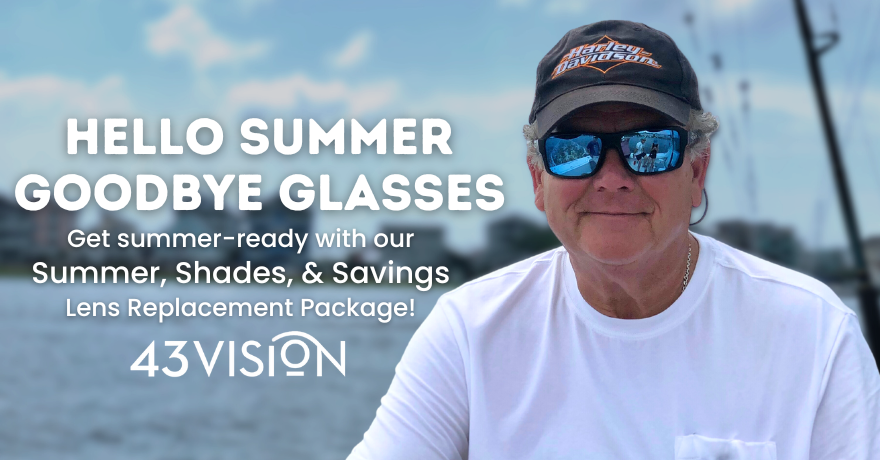
Get summer-ready with our Summer, Shades, & Savings Lens Replacement Package!

The only glasses you should worry about this summer are your sunglasses! 🕶

Swap your readers and bifocals out for a Free Pair of Designer Sunglasses. PLUS, save $1,000 with our Summer, Shades, & Savings Lens Replacement Package.

$1000 Savings + 0% Financing for 36 Months + A Free Pair of Designer Sunglasses = An Unforgettable Summer ☀

With Custom Lens Replacement, you can have the freedom to explore, enjoy, and experience life to its fullest. It’s the one thing that makes life easier and more enjoyable.

Don’t wait to get the vision you deserve. Tap here to book your free exam with one of our doctors, or call (405) 883-4343.

Take our Self-Test and learn more about your options in as little as 60 seconds.

Curious about pricing? Our helpful Price Quote Tool can give you more information on your vision investment and the different ways to pay for it.

– 43Vision, from the team at ClearSight LASIK


*May not be combined with insurance or other discounts. Offer applies to Precision 20/20 and Premier Plus Plans only. Must have exam by 05/31/23 and Procedure by 06/30/23. Financing WAC.


source https://www.43vision.com/blog/get-summer-ready-with-our-summer-shades-savings-lens-replacement-package/

Tuesday, 11 April 2023

Adult Vision: 60-80 Years of Age

As we age, our eyes change and become more susceptible to diseases and conditions that can lead to visual impairment and even blindness. While not all vision problems are age-related, they become more prevalent in the elderly population. Therefore, it is essential to know about the various eye diseases and conditions, their causes, and treatment options. This article will discuss the common eye problems that affect individuals aged 60-80 years and how they can be diagnosed and treated. At 43Vision, we are dedicated to treating patients over the age of 43. We have the most advanced technology available and offer advanced treatments to help ensure our patients have the best vision possible, no matter what their age is. Call or visit the 43Vision website today to schedule your consultation and start your journey to better vision. 

What are the most common age-related vision problems for adults age 60-80 years of age?

Cataract

A cataract is a clouding of the lens in the eye that affects vision. Cataracts are prevalent in individuals over the age of 60, and they occur when protein in the lens of the eye clumps together, forming a cloudy area that obstructs vision. The symptoms of cataracts include cloudy, blurred, or dim vision, difficulty seeing at night, and sensitivity to glare. Cataract surgery is the most common treatment option, and it involves removing the cloudy lens and replacing it with an intraocular lens. Cataract surgery is extremely safe, can significantly improve vision, and is the only treatment for removing cataracts.

Age-Related Macular Degeneration (AMD)

Age-related macular degeneration is a leading cause of vision loss in older adults. The macula is a part of the retina that is responsible for sharp, central vision. As we age, the macula can become damaged, leading to a loss of visual acuity in the center of our field of vision. The early warning signs of AMD include blurry vision, distorted central vision, and blind spots in the field of vision. Family history is one of the main risk factors for AMD.

There are two forms of AMD – dry and wet. Dry AMD is the most common form and occurs when the macula thins and breaks down over time. Wet AMD, on the other hand, occurs when abnormal blood vessels grow under the retina, causing damage and leakage of fluid, leading to sudden and severe vision loss. While there is no cure for AMD, there are several treatment options available that can slow down the disease’s progression and preserve vision. These include dietary supplements, laser treatment, and medication injections into the eye.

Glaucoma

Glaucoma is a group of eye diseases that damage the optic nerve, which is responsible for transmitting visual information from the eye to the brain. It is a leading cause of blindness in the United States, and it is more prevalent in individuals over the age of 60. There are several types of glaucoma, but the most common type is primary open-angle glaucoma. The signs and symptoms of glaucoma include increased pressure in the eye, reduced peripheral vision, and loss of visual field. There is no cure for glaucoma, but it can be treated and managed with eye drops, medication, laser surgery, or conventional surgery.

Diabetic Retinopathy

Diabetic retinopathy is a complication of diabetes that affects the eyes. It occurs when high blood sugar levels damage the blood vessels in the retina, causing them to leak fluid or bleed, leading to vision loss. The symptoms of diabetic retinopathy include blurred vision, dark or empty spots in the field of vision, and difficulty seeing at night. The risk of developing diabetic retinopathy increases with the duration of diabetes, high blood pressure, high blood sugar levels, and smoking. Diabetic retinopathy can be treated with medication injections into the eye, laser treatment, or surgery, but prevention is the best treatment option. It is essential to control blood sugar levels and blood pressure, maintain a healthy diet, exercise regularly, and quit smoking. If left untreated diabetic retinopathy can lead to permanent vision loss.

Dry Eye Syndrome

Dry eye syndrome occurs when the eyes do not produce enough quality tears, leading to discomfort, irritation, and blurred vision. Dry eye syndrome, also known as keratoconjunctivitis sicca, is a common eye condition that affects many adults aged 60 and above.

The risk of developing dry eye syndrome increases with age, especially in women. Hormonal changes during menopause can lead to dry eyes, and age-related changes in the eye’s structure and function can also contribute to the condition. Additionally, certain medications commonly used by older adults, such as antihistamines and diuretics, can cause or worsen dry eye syndrome.

Symptoms of dry eye syndrome can include:

  • A gritty or sandy feeling in the eyes

  • Burning or stinging sensations

  • Redness and irritation

  • Blurred vision

  • Sensitivity to light

  • Eye fatigue

  • Excessive tearing

  • Difficulty wearing contact lenses

If left untreated, dry eye syndrome can lead to corneal damage and vision loss. However, there are several treatment options available to manage the symptoms and prevent complications. These include:

  • Artificial tears: Over-the-counter eye drops that lubricate the eyes and help replace natural tears.

  • Prescription eye drops: Medications that stimulate tear production or reduce inflammation in the eye.

  • Punctal plugs: Small devices inserted into the tear ducts to prevent tears from draining away too quickly.

  • LipiFlow: A device that uses heat and pressure to clear blocked oil glands in the eyelids.

  • Nutritional supplements: Omega-3 fatty acids and other dietary supplements may help improve tear quality and reduce inflammation.

  • Lifestyle changes: Avoiding dry, windy environments, using a humidifier, and taking frequent breaks from reading or computer work can all help reduce dry eye symptoms.

It’s important to note that dry eye syndrome can also be a symptom of other underlying health conditions, such as diabetes, rheumatoid arthritis, and thyroid disorders. If you’re experiencing persistent dry eye symptoms, it’s important to see an eye care professional for a comprehensive eye examination and proper diagnosis.

Can age-related vision problems in adults ages 60-80 affect their ability to drive?

Age-related vision impairment can make driving difficult, but not all individuals with these problems will have to stop driving altogether. The ability to drive depends on the severity of the vision problems and how they affect an individual’s visual function.

In the United States, each state has different laws regarding driving with vision impairments. Some states require individuals to have a minimum visual acuity, visual field, or contrast sensitivity to be able to drive, while others do not have specific requirements. It is important to check with your state’s Department of Motor Vehicles for specific requirements.

For those with mild age-related vision problems, driving may still be possible with corrective lenses, such as glasses or contacts. However, as the condition progresses and visual function is significantly impacted, driving may become unsafe.

Conditions such as cataracts and macular degeneration can cause significant visual impairments, such as glare sensitivity, blurred vision, and loss of central vision. In some cases, surgery may be an option to improve vision and allow for safer driving. Cataract surgery involves the removal of the clouded lens and replacement with an artificial intraocular lens. This can improve visual acuity and reduce glare sensitivity.

Surgery for macular degeneration is not as common, as it cannot cure the condition, but it may be an option in certain cases. One type of surgery is a vitrectomy, which involves removing the gel-like substance in the eye (vitreous) and replacing it with saline solution. Another type of surgery is submacular surgery, which involves the removal of abnormal blood vessels in the macula. However, these surgeries are typically reserved for advanced cases of macular degeneration and are not always successful in improving vision.

It is important to note that even with surgery, some individuals may still have visual impairments that affect their ability to drive safely. In these cases, it may be necessary to limit or stop driving altogether. It is important to prioritize safety when it comes to driving, as impaired vision can increase the risk of accidents and injuries.

In addition to eye surgery, there are other treatments and aids that can help individuals with age-related visual perception problems, such as low vision aids, visual rehabilitation, and vision therapy. It is important to consult with an eye doctor to determine the best course of treatment for your specific condition and to ensure that you are still able to drive safely.

What types of vision surgeries are most common in adults age 60-80 years of age?

  • Cataract Surgery: Cataracts are the most common cause of vision loss in adults aged 60 and above. Cataract surgery is a relatively safe and effective procedure that involves removing the clouded lens of the eye and replacing it with an artificial lens. This surgery is usually performed on an outpatient basis and is minimally invasive.

  • Glaucoma Surgery: If medications and laser treatments do not control the intraocular pressure in the eye, surgery may be necessary to prevent further damage to the optic nerve and vision loss. There are several types of glaucoma surgery, including trabeculectomy, tube shunt surgery, and laser trabeculoplasty.

  • Retinal Surgery: Surgical procedures may be necessary for retinal detachment, macular holes, or epiretinal membranes. These procedures include pneumatic retinopexy, scleral buckle surgery, and vitrectomy. The goal of retinal surgery is to reattach the retina or remove abnormal tissue from the retina.

  • Corneal Surgery: Corneal surgery may be necessary to treat conditions such as corneal dystrophy, corneal ulcers, or corneal scars. Procedures include corneal transplantation, corneal cross-linking, and phototherapeutic keratectomy. The goal of corneal surgery is to improve vision by replacing or reshaping the cornea.

  • Refractive Surgery: Refractive surgery is a surgical procedure that corrects vision problems such as nearsightedness, farsightedness, and astigmatism. Popular options include LASIK, PRK, and SMILE. Refractive surgery aims to reduce dependence on glasses or contact lenses.

  • Eyelid Surgery: As people age, their eyelids can become droopy, causing vision problems and a tired appearance. Eyelid surgery, or blepharoplasty, can improve vision and appearance by removing excess skin and fat from the eyelids.

The decision to undergo surgery should be made in consultation with an eye care professional and should take into account the risks and benefits of the procedure, as well as the patient’s individual needs and preferences. An experienced and highly trained refractive surgeon like those at 43Vision will recommend the procedure that is optimal for your individualized needs.

43Vision is the first vision correction facility exclusively for patients over the age of 43 who wish to lessen or remove their dependence on reading glasses or bifocals. Our facility utilizes the most current technology available to combat presbyopia and prevent the development of cataracts in the future. We offer specialized vision correction that is customized to meet your unique needs. To learn more about the vision correction procedures we offer or to schedule your consultation, visit our website or call the office today.


source https://www.43vision.com/blog/adult-vision-60-80-years-of-age/

Friday, 31 March 2023

Enjoy $1,000 Savings as You Spring into Crisp, Clear Vision with Custom Lens Replacement

Why are SO MANY OKLAHOMANS booking their Custom Lens Replacement consultations right now at 43Vision? 🤔

A few reasons:

  • Take advantage of all the beauty Oklahoma spring has to offer and be ready for summer adventures without constantly depending on readers and bifocals.

  • Get relief from the itchy, watery eyes that come along with springtime.

  • We are offering $1,000 savings on Custom Lens Replacement or any of our other advanced vision correction treatments when you book your consultation in April.

So don’t wait, tap here to book your free exam with one of our doctors, or call (405) 883-4343.

Take our Self-Test and learn more about your options in as little as 60 seconds.

Curious about pricing? Our helpful Price Quote Tool can give you more information on your vision investment and the different ways to pay for it.


source https://www.43vision.com/blog/enjoy-1000-savings-as-you-spring-into-crisp-clear-vision-with-custom-lens-replacement/

Monday, 6 March 2023

Enjoy $1,000 off Custom Lens Replacement with our Spring Break Savings!


Take a break from your readers and bifocals this Spring Break!

Save an extra $1,000 on Custom Lens Replacement. Just in time for warmer spring weather and all the adventures that come with it.

Plus, when you stack your tax refund, our $1,000 off savings, and payment plans, Custom Lens Replacement at 43Vision is a no-brainer!

Here are a few ways to get started:

Tap here to book your free exam with one of our doctors, or call (405) 883-4343.

Take our Self-Test and learn more about your options in as little as 60 seconds.

Curious about pricing? Our helpful Price Quote Tool can give you more information on your vision investment and the different ways to pay for it.


source https://www.43vision.com/blog/enjoy-1000-off-custom-lens-replacement-with-our-spring-break-savings/

Sunday, 29 January 2023

Tax Refund? Invest in Yourself and Enjoy an Extra $1,000 Off Custom Lens Replacement

What’s the best place to invest your tax refund? In YOURSELF, of course! And when you make the investment in the crisp, clear vision you’ve always wanted, you can improve literally every waking moment of your life.

Here’s the simple formula to maximize your savings now and maximize your fun this upcoming Spring.

  1. Invest your tax refund toward Custom Lens Replacement, 43Vision’s flagship treatment to help patients get out of readers and bifocals

  2. Combine that with our February “Sweetheart Savings” of $1,000 off Custom Lens Replacement

  3. AND take advantage of our flexible financing options for super-affordable monthly payments (including no interest until 2026 for qualified patients!)

And you’re all set! Get out of the readers and bifocals and get ready for your Springtime adventures.

When you stack your tax refund, our $1,000 off savings and payment plans, Custom Lens Replacement at 43Vision a no-brainer!

We have a few ways to get started:

Tap here to book your free exam with one of our doctors, or call (405) 883-4343 during business hours and we’ll get you set up.

Take our Self-Test and find out more about your options in as little as 60 seconds.

Curious about pricing? Our helpful Price Quote Tool can give you more information on your vision investment, and the different ways to pay for it.


source https://www.43vision.com/blog/tax-refund-invest-in-yourself-and-enjoy-an-extra-1000-off-custom-lens-replacement/

Tuesday, 24 January 2023

Adult Vision: 40-60 Years of Age

You have probably experienced changes in your vision if you are over the age of 40. Some of the most common eye problems adults develop between the ages of 41 and 60 are trouble seeing well for close work and reading. This is also the time when additional eye changes may begin to interfere with your ability to work and enjoy life.

The emergence of near vision issues around the age of 40 can be rather concerning and frustrating if you have had generally good vision your entire life and haven’t needed glasses or contact lenses to correct distance vision. It can appear that your ability to read your computer screen or see texts suddenly vanished. In reality, these changes have been taking place over time ever since childhood and have been progressively getting worse. Your eyes have had enough focusing strength up to this point to enable you to see clearly enough for close work and reading. Your eyes’ ability to focus is now insufficient for tasks requiring clear, comfortable close vision. This common age-related change in the eye’s focusing ability, called presbyopia, will progressively worsen over time.

You may have discovered first that holding reading items farther away was necessary to see them clearly. Print may appear blurry on business-related documents or on a restaurant menu, especially in low light. Presbyopia causes changes in near vision that can necessitate the use of bifocal or multifocal lenses, even if you already wear prescription glasses for distance vision. If you are nearsighted, you might have noticed that in order to see better up close, you now need to take your glasses off.

For those over the age of 43 who desire to lessen or do away with their need for reading glasses or bifocals, 43Vision, the first vision correction facility devoted only to treating patients in this demographic, is here to help. Our facility uses the most cutting-edge technology available to combat presbyopia’s effects and prevent patients from having to deal with cataracts in the future. In this article, we will discuss common age-related vision changes between the ages of 40 and 60. To learn more about the vision correction procedures we offer, or to schedule an appointment, call the 43Vision office today.

What are some common age-related vision changes that adults ages 40 to 60 experience?

Problems reading or doing close-up work: To be able to see printed content clearly, you must hold it farther away. You might also remove your corrective lens if you want to see up-close objects more clearly. Perhaps you need reading glasses because newspaper or restaurant menus seem unclear, especially in dimly lit spaces, or if you wore glasses for distance previously, you may now need bifocals.

Need for more lighting: You might initially discover that you require more light than you did in order to see reading material or computer screens clearly. Reading and other close-up jobs will be simpler if there are brighter lights in your workspace or close to your reading chair.

Problems with glare or photophobia: You discover that you are more sensitive to glare from headlights at night or from sunlight reflected off of windshields or pavement during the day. More glare is produced as you get older because as your lenses change, light rays entering your eye scatter rather than focus on a single point on your retina.

Color perception changes: Our lenses begin to discolor and lose their clarity as we get older, affecting visual perception and color vision. This may impede our capacity to discern between specific color shades and view colors clearly. Our lenses can cloud up over time to the extent that cataract surgery may be necessary to replace the hazy natural lens with a clear artificial lens.

Decreased tear production: Our tear glands generate less tears as we get older, which makes our eyes feel dry and irritated. Many people in their 40’s to 60’s struggle with dry eye syndrome. Postmenopausal women have the highest prevalence of dry eye symptoms and are the most frequent consumers of eye drops and artificial tears. This can be concerning since sustaining healthy eyes and excellent vision depends on producing enough tears.

What can I do to help maintain healthy eyesight?

The following advice is provided by the National Institute on Aging to maintain eye health:

  • When you are outside, wear sunglasses that block ultraviolet (UV) light and wear a hat with a wide brim.

  • Give up smoking, which raises your risk of developing eye diseases.

  • Consume healthy foods and a nutritious diet that promotes eye health.

  • Exercise regularly and maintain a healthy weight.

  • To prevent damage to your eyes and visual impairment, it is important to control your blood pressure.

  • Controlling your diabetes is crucial as it may cause permanent vision loss or blindness.

  • Reduce eye strain when concentrating on a computer or single object by taking a brief break every 20 minutes for about 20 seconds.

Regular comprehensive eye exams are essential for identifying issues before they become more serious.

What can increase the risk of developing eye and vision problems after age 40?

Adults over 40 are more likely to have health issues and work environments that increase their likelihood of developing vision and eye health issues. These include:

  • Medical conditions like diabetes or high blood pressure (hypertension)

  • Visually demanding work may effect eye health or a job that puts workers at risk for eye damage, even if they use protective eyewear.

  • Having glaucoma, macular degeneration, or other eye disorders in the family history

  • Developing a chronic condition like high cholesterol, thyroid issues, depression, anxiety, or even arthritis that require medications that can have potential visual side effects.

What are some warning signs and symptoms of a more serious eye health problem?

Did you know that you are more likely to experience a number of major eye health issues in your 40s and 50s? In fact, age-related eye conditions such as macular degeneration, cataracts, diabetic retinopathy, and glaucoma are the main cause of blindness and impaired vision in the United States.

Because of this, it’s crucial for everyone in this age range to have routine eye examinations and to watch for any early warning signs of serious vision disorders.

The following warning signs in a 40 to 60-year-old’s eye call for immediate attention:

Sudden shifts in vision: Variations in your vision’s sharpness may indicate high blood pressure, diabetes, or diabetic retinopathy. The retina, the light-sensitive tissue along the back of the eye that transforms light rays into signals that are sent to the brain for interpretation, is harmed by both medical diseases, which affect its tiny blood vessels.

Seeing flashes and floaters: Adults in their 40s and 50s frequently notice floating specks or “hairs” in their visual field. These are typically unharmful particles that are a normal component of aging and float around in the fluid inside the eye. However, you shouldn’t expect to immediately notice a large number of eye floaters and intense flashes of light. This could indicate a retinal detachment, an urgent eye condition that could endanger your vision. See your eye doctor immediately for an evaluation if you experience an increased number of flashes and eye floaters.

Peripheral or side vision is lost: Don’t disregard a loss of peripheral vision as the result of simple eye fatigue. Glaucoma, known as the “silent thief of sight” since it doesn’t manifest symptoms until vision loss has started, may be the cause of peripheral vision loss.

Perception of distorted images: Age-related macular degeneration (AMD) may be present if parallel lines that ought to be straight seem wavy in the middle of your field of vision. This condition causes loss of central vision because it affects the macula, the center of your retina.

How often should you have an eye exam between the ages of 40 and 60?

Routine eye exams are essential for people of all ages but are very important between 40 and 60 years of age. The National Eye Institute recommends adults in this age range see their eye doctor for a comprehensive eye exam once per year in order to monitor age-related vision changes as well as identify and prevent any other eye diseases from progressing.

What options do people with presbyopia have to regain clear vision?

Experiencing near vision issues after the age of 40 might be troubling and irritating if you have never needed to wear glasses or contact lenses before. Presbyopia develops as the internal lens in the human eye loses the flexibility that allows it to focus on both faraway and nearby things. Eye doctors recommend presbyopic individuals a number of options for regaining clearer near vision. These consist of:

  • Eyeglasses, including reading glasses, bifocals, and progressive lenses.

  • Contact lenses, such as multifocal and monovision lenses.

  • Laser surgery and various forms of refractive surgery.

Age-related presbyopia worsens over time, and you could find that your eyeglass prescription for eyeglasses or contact lenses needs to be updated more frequently than it used to. Many people become frustrated dealing with the hassle of prescription glasses or contact lenses. At 43Vision, we are proud to offer vision correction procedures to patients over 43 that provide freedom from contact lenses and glasses as well as presbyopia.

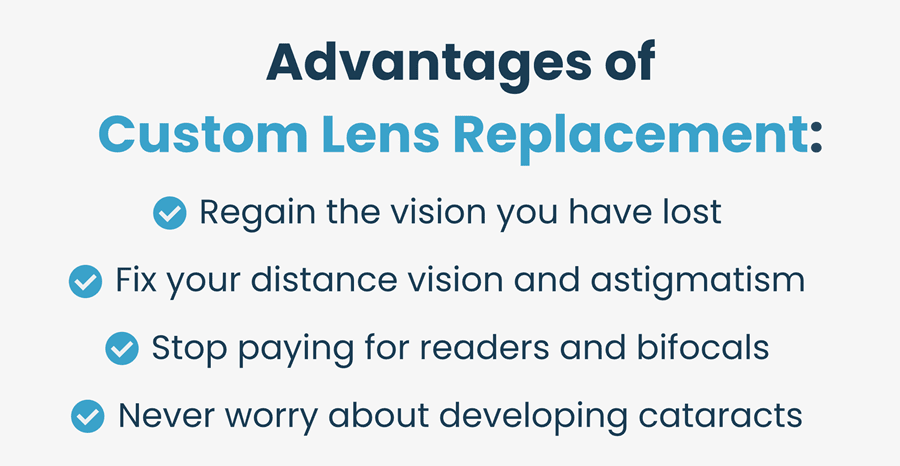
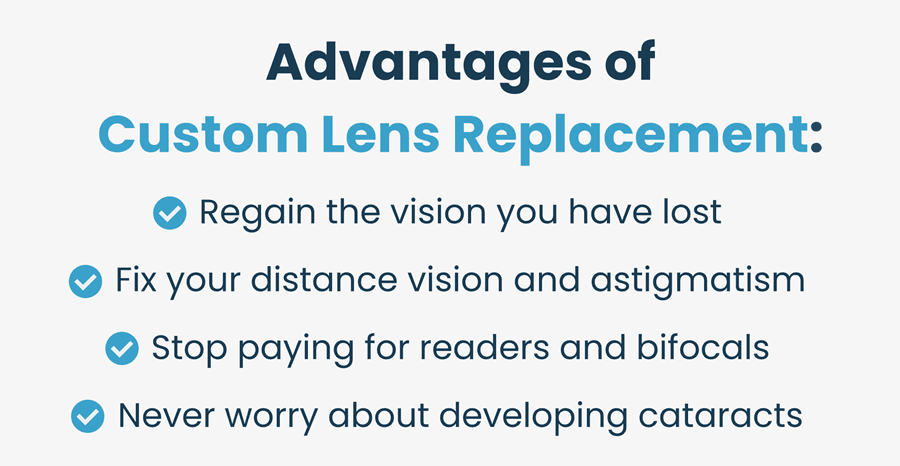
In a custom lens replacement procedure, we replace the eye’s presbyopic lens with a transparent, cutting-edge lens. Due to the fact that it can address a variety of vision problems, it has emerged as 43Vision’s most popular solution. Custom lens implants cure presbyopia, astigmatism, nearsightedness, and far-sightedness, which reduces or eliminates the need for readers and bifocals. Additionally, it stops the future development of cataracts, eliminating the need for cataract surgery down the road!

Our staff of highly qualified medical professionals and board-certified surgeons is committed to making sure your time with us is relaxing, enjoyable, and, most importantly, life-changing. Presbyopia and age-related vision loss can now be successfully treated thanks to advances in vision correction technology during the past 25 years.

We at 43Vision are dedicated to advancing with technology at all times. We consistently make investments in the most up-to-date, reliable technologies that will help our patients improve visual acuity and gain freedom from glasses or contacts. We offer blended LASIK as well as Custom Lens Replacement in order to give our patients the best vision correction procedure for their unique needs. To find out what procedure is best for your vision needs, call our office today to schedule a comprehensive eye examination and get on your way to clearer vision.


source https://www.43vision.com/blog/adult-vision-40-60-years-of-age/

Saturday, 31 December 2022

Lisa’s 43Vision Story

After years of living with the frustrations of bad vision, Lisa found a solution in Custom Lens Replacement from 43Vision!

Ready to escape the readers and enjoy every waking moment with the crisp, clear vision you deserve? It starts with a free exam with one of our doctors. Tap the button or call (405) 883-4343 to schedule now.


source https://www.43vision.com/blog/lisas-43vision-story/

Sunday, 25 December 2022

New Year, New VIEW – Save $1,000 to start 2023

If you don’t want to spend another year frustrated with glasses, contacts, readers or bifocals, right now is the time to book your free vision correction consultation at 43Vision.

New years often lead to new goals. Whether you’re focused on health and fitness, growing professionally, or even spending more quality time with the family, it’s always better with crisp, clear vision!

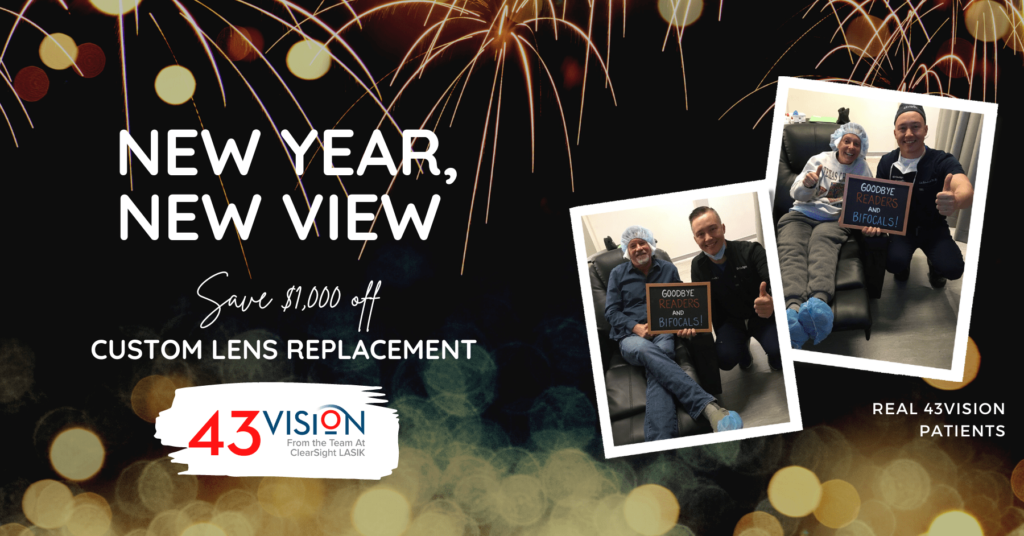
And when you have your consultation at 43Vision in January, you’ll enjoy a special belated holiday gift from our team – a gift certificate for $1,000 off your Custom Lens Replacement procedure.

Book your consult, find out what you qualify for, get all your questions answered. And if you decide life without bad reading vision is the life for you, take $1,000 off your procedure in the month of January.

Tap the button below, or call (405) 883-4343 during business hours, and we’ll be happy to get you scheduled on a day and time that’s convenient for you!


source https://www.43vision.com/blog/new-year-new-view-save-1000-to-start-2023/

Monday, 19 December 2022

Custom Lens Replacement Recovery

The process of replacing the eye’s natural lens with a clear, leading-edge artificial lens implant is known as custom lens replacement and is often referred to as refractive lens exchange (RLE). Because of its versatility and effectiveness, Custom Lens Replacement permanently improves vision and is our most recommended option for custom vision correction at 43Vision.

Custom Lens Replacement procedures reduce refractive error while treating presbyopia, astigmatism, nearsightedness (myopia), and farsightedness (hyperopia) while minimizing or completely eliminating the need for reading glasses and bifocals. Additionally, it eliminates the risk of developing cataracts, preventing the need for cataract surgery in the future.

When considering a custom lens replacement, patients want to know what to expect during the recovery period. In this article, we will discuss the recovery time following a custom lens replacement procedure and answer other frequently asked questions about the healing process. To learn more about custom lens replacement and to schedule your consultation, call 43Vision today!

How long does it take to recover from custom lens replacement?

Lens Replacement patients all heal slightly differently, but most patients should all end up with the same result: improved eyesight and the freedom to do more of what they want in life. After a refractive lens exchange at 43Vision, the initial healing phase typically lasts one week. At this point, the majority of the patient’s daily activities should be resumed.

After having eye surgery, the majority of patients with a considerable correction will immediately notice that their vision without a corrective lens is better than it was before. However, they will still have dilated pupils, which will result in some blurred vision. When the pupil goes back to its original size, eyesight should noticeably improve.

After the procedure, the patient’s visual acuity and visual perception should have improved, and in 24 hours, distance vision should be back to normal. Usually, it takes longer for reading vision and up-close focus to get better with implantable contact lenses, but with a multifocal IOL, reading vision should improve within three to five days. In the initial months of the healing period, you might notice a glare or halos around lights.

A follow-up appointment with your eye surgeon should be scheduled for about a week after the eye surgery. To ensure that the vision correction was effective and that the eye is recovering properly, an examination will be performed. If everything seems to be healing routinely, a final one-month appointment will be scheduled to make sure that vision has stabilized and that the prescription eye-drop medication has worn off. If the second eye is being operated on at a different time, this procedure will proceed according to the same timetable.

If you are tired of having to wear glasses or contact lenses to see clearly or have been told you are not a candidate for laser vision correction, call 43Vision now for more information about Custom Lens Replacement and to schedule your consultation. Clear vision is just a phone call away!

More FAQ’s about Custom Lens Replacement Recovery

How long will I experience blurry vision?

Though most people need 24 to 48 hours, some patients notice an improvement in their vision right away. Sometimes, it can take up to two weeks for vision to stabilize while the eye adjusts to the new intraocular lens implant (IOL).

When can I drive after custom lens replacement?

Much like LASIK eye surgery, after a custom lens replacement, many people can drive again within 24 hours. However, it is strongly advised that you wait to drive following your surgery until you have seen your eye doctor for your follow-up appointment. Your eye surgeon could advise you to postpone driving for a few more days if your vision is still improving.

When can I be left alone after RLE?

You will need someone to drive you home on the day of your custom lens replacement, but once you are home, you should be fine to stay alone as long as you feel up for it.

Can I exercise after custom lens replacement?

Most patients resume their normal exercise routine the day after their custom lens replacement treatment. While walking and other non-strenuous exercise are permitted, patients should avoid activities that cause pressure in the eyes or involve objects flying towards the face (basketball, volleyball, martial arts, etc.) Your surgeon will tell you what activities are acceptable and what to avoid.

How can I reduce the risk of complications after a custom lens replacement?

Attending all of your follow-up appointments and paying close attention to your surgeon’s instructions are the best ways to reduce the risks of any type of refractive surgery, including a custom lens replacement. Using the eye drops recommended by your surgeon to prevent dry eye and keep your recovering eyes lubricated will be one of those guidelines. You’ll be shown which eye drops to use by your doctor. Antibiotic eye drops help with healing, prevent infection, and make the recovery process more comfortable for you.

Will I be in pain after a custom lens replacement?

Custom lens replacement surgery is painless and one of the safest medical procedures out there. The patient will be given a local anesthetic before the procedure to ensure that they won’t feel any pain. Patients commonly experience some brief discomfort as the anesthetic wears off.

It is common for patients to experience mild discomfort or itching around the eye in the days after having artificial lenses implanted, but this usually goes away quickly. In most cases, over-the-counter analgesics are more than adequate to treat any discomfort the patient may be feeling.

The 43Vision Difference

The best way to determine if a custom lens replacement or laser eye surgery is right for you is to schedule your free exam at 43Vision and get an official recommendation from our eye doctors. 43Vision is the first vision correction center dedicated to helping people over the age of 43 who want to reduce or eliminate their need for reading glasses or bifocals.

Our state-of-the-art vision correction clinic uses the most cutting-edge technology available to combat presbyopia’s effects and prevent patients from having to deal with cataracts in the future. The most common comment we get from patients is that they wish they had gotten their vision corrected sooner. So what are you waiting for? Call 43Vision today and start your journey to clear vision and eliminate glasses or contacts for good.


source https://www.43vision.com/blog/custom-lens-replacement-recovery/

Monday, 28 November 2022

Refractive Lens Exchange vs. Cataract Surgery

It is estimated that over half of all Americans will need cataract surgery at some point in their lifetime. Because it is so common for adults to develop cataracts later in life, most people are familiar with cataract surgery.

While a refractive lens exchange and cataract surgery are similar procedures, they do have some differences. In this article, we will talk about what cataract surgery and refractive lens exchange are, how they are similar, and what makes them unique.

43Vision is the first vision correction center specifically designed for people aged 43 and older who desire to lessen or do without the need for reading glasses or bifocals. Our center uses the most cutting-edge technology available to treat presbyopia’s effects and prevent our patients from having to deal with cataracts in the future.

To learn more about the custom vision correction procedures we offer at 43Vision, call our office today to schedule your comprehensive eye examination and start your journey to visual freedom.

What are cataracts, and how are they treated?

The clouding of the eye’s lens is known as a cataract. Your lens becomes foggy as you age because the proteins in your lens start to break down. Because cataracts on the human eye typically develop very slowly and may not initially impair vision, you might not even be aware that you have one. While cataracts are rarely dangerous, over time, they are likely to impair eyesight and cause blurred vision that cannot be improved with a corrective lens.

Over 90% of people by the age of 65 have cataracts, and 50% of those between the ages of 75 and 85 have some visual impairment as a result. Overusing your eyes does not produce cataracts, and they do not spread from one eye to the other.

Since the human lens is clear, light can readily pass through it. It is 65 percent water and has no blood supply. Although the lens continues to produce new cells throughout our lifetimes, a number of factors interact as we age to cause certain regions of the lens to become hazy, hard, and dense. The cloudy lens is then unable to provide a clear image to the retina for processing before sending it to the brain via the optic nerve, causing blurry vision.

Cataracts may develop with age, be congenital, the result of trauma to the eye, or be linked to another factor, such as a medication or disease. Once cataracts have developed, they can only be treated surgically by being removed and replaced with an artificial lens. Your eye doctor can implant a variety of lens types and powers during surgery, including a multifocal intraocular lens or lenses that treat astigmatism. Your visual acuity will improve, and your need to wear glasses will probably be lessened after surgery but not eliminated.

You and your surgeon will discuss the best type of lens implant and power for you to achieve the visual perception you are hoping for. A cataract cannot be treated with medication. Surgery is often done under local anesthetic as an outpatient procedure. You and your ophthalmologist will talk about the best time to get the cataract removed after it has gotten bad enough to affect your quality of life. Cataract surgery is the most common surgery performed worldwide.

What is refractive lens exchange?

Patients over 40 who are dissatisfied with their reading glasses and vision deterioration may benefit from the vision correction procedure known as RLE (Refractive Lens Exchange), or sometimes as CLR (custom lens replacement). RLE, also known as the Lifestyle Lens, enables patients to resume many of their favorite activities.

The natural lens of the eye is removed during the RLE procedure, and it is replaced with an artificial Intraocular Lens (IOL) to focus and correct your vision. Reducing reliance on glasses is the main goal of an RLE. Before the procedure, your eye will be numbed using anesthetic eye drops. To access the lens, your eye surgeon makes a tiny, less than 3mm-long opening in the eye. The process results in the formation of a capsulorhexis. The lens of the eye is then disassembled and removed using an ultrasound probe. The name of this process is phacoemulsification. A new intraocular lens (IOL) is placed in the eye after these natural lens fragments have been removed. The IOLs are foldable and flexible to fit through the narrow hole. They unfold and assume their position once within the eye. The treatment takes less than 30 minutes, and the IOLs are permanent.

There are a variety of high-end IOLs available to fit your needs and lifestyle. To choose the IOL that is best for you, highly precise measurements are done with cutting-edge equipment. You can use the accommodating IOL to improve your ability to see up close or far away, or you can choose a multifocal IOL to address both viewing distances at once. The majority of RLE patients may no longer need to wear contact lenses or glasses at all.

Are cataract surgery and refractive lens exchange (CLR) the same thing?

Refractive lens exchange, or custom lens replacement, and cataract surgery are essentially the same surgical procedure that involves the implant of a phakic intraocular lens (phakic IOLs), but there are some important differences. The major distinction between the two is that in RLE, the eye’s natural lens is not cloudy, and the main goal of the procedure is to lessen a patient’s need for glasses. RLE is not used to treat cataracts but can, in fact, prevent their development later in life, as an artificial lens cannot get cataracts.

Many patients choose to have RLE after developing presbyopia that cannot be successfully treated with laser vision correction. Presbyopia is an age-related condition where the natural crystalline lens inside the eye loses its ability to focus on close objects. While both RLE and cataract surgery involve replacing the eye’s natural lens with artificial intraocular lenses, the main difference is the reason for having the procedure.

Modern cataract surgery has developed into a refractive surgery with advancements in ophthalmology. The majority of cataract patients want a higher quality of life and the clearest vision possible in addition to the removal of the cataract.

The main distinction between RLE and cataract surgery is that cataract patients are seeking treatment for a visual deficiency that an eyeglass prescription cannot help and, generally speaking, are delighted with any level of improved vision. Patients with RLE typically have good vision with glasses or contact lenses and are striving for clear vision without the need for them.

What are the benefits of lens replacement surgery?

RLE is a technique that is both safe and effective for patients over the age of 40. One of the benefits of RLE, also called custom lens replacement) as opposed to LASIK (laser-assisted in situ keratomileusis), is that it is a more long-lasting treatment for presbyopia and can address any refractive errors you might have, including astigmatism, hyperopia (far-sightedness), and myopia (nearsightedness). It is also a great vision correction alternative for those who do not qualify for laser eye surgery because their cornea is too thin.

Additionally, you won’t need another procedure to treat cataracts in the future. You can achieve independence from glasses or contacts thanks to the implanted lenses, which are permanent and last the rest of your life. Improved focus, better vision, cataract prevention, lessened glare and halos, and an easier time differentiating colors (contrast sensitivity) are among the advantages of RLE.

Clearer vision and improved refraction are the most obvious benefit of cataract eye surgery. However, a patient’s quality of life is also greatly improved with cataract surgery. In addition, cataract surgery is a quick procedure with a simple recovery period that results in improved vision while protecting eye health.

43Vision specializes in Custom Lens Replacement, and it is our most recommended vision correction option because it can address so many different vision issues. To learn more and find out if you are a candidate for RLE, schedule your exam with our highly trained and experienced team at 43Vision. Call our 43Vision office at 405-883-4343 or schedule an exam on our website now.


source https://www.43vision.com/blog/refractive-lens-exchange-vs-cataract-surgery/

Thursday, 24 November 2022

Give Toys, Get Clear Vision (How to Get Our Best Pricing of the Year)

It’s supposed to be the MOST wonderful time of the year…

But for some in our community, the holiday season leaves a lot to be desired. Especially those who don’t have the resources to put gifts under the tree.

That’s why we’re partnering with our patients for our annual ClearSight & 43Vision Toy Drive! It works like this:

  1. Bring a new, unwrapped toy to your consultation appointment at 43Vision.

  2. We give you a $1250 Gift Certificate to use toward your procedure. (our biggest savings of the year!)

Pretty simple, right?!

You’ve thought about getting your bad vision fixed, and now is the time. Save big, support our community, and enjoy the holidays with the crisp, clear vision you know you deserve.

Tap here to book online, or give us a call – (405) 883-4343.


(Cannot be combined with any other offers)


source https://www.43vision.com/blog/give-toys-get-clear-vision-how-to-get-our-best-pricing-of-the-year/

Monday, 21 November 2022

Custom Lens Replacement vs. Refractive Lens Exchange: Is There a Difference

For visual changes brought on by aging in your eye’s natural lens, Refractive Lens Exchange (RLE), sometimes referred to as Custom Lens Replacement (CLR), offers a precise and long-lasting solution. What is the difference between the two procedures? Nothing but the names. RLE is like turning back the hands of time, according to those who have had it done. It gives you a more youthful field of vision while preventing cataracts in the future.

People who want to repair and enhance their vision without the use of contacts or glasses and avoid the necessity for cataract surgery are becoming more and more interested in Refractive Lens Exchange. 43Vision is committed to transforming lives by providing people with the gift of better vision. We want to improve your ability to perceive the world clearly. To schedule a consultation and find out if you qualify for any of our life-changing procedures, call our office today.

Refractive Lens Exchange: What Is It?

Both the terms refractive lens exchange and custom lens replacement apply to the same procedure. The natural lens of the eye is replaced with an intraocular lens (IOL) during a Custom Lens Replacement procedure, also known as RLE, to restore vision and eliminate refractive errors. A defect in the shape of the eye that prevents light from correctly focusing on the retina is referred to as a refractive error. This vision loss may be brought on by cataracts, astigmatism, presbyopia, nearsightedness (myopia), or farsightedness (hyperopia). Not only is vision significantly better after intraocular lens implantation with RLE, but the benefits are also favorable and long-lasting.

RLE technology, also known as CLR, is currently the most effective and safe it has ever been and is being used successfully all over the world. Patients who have had vision correction thanks to RLE experience a new level of visual freedom. Many people decide to have RLE performed before cataracts have an opportunity to develop, and with an accommodating, multifocal IOL, toric lens, or array multifocal lens, your improvements in visual acuity will be dramatic. You don’t need to let bad vision keep you from leading the life you’ve always wanted. 43Vision is here to provide you with the freedom to see life more clearly while also assisting you in improving the quality of your vision.

FAQ’s about Custom Lens Replacement vs. Refractive Lens Exchange

Following a Refractive Lens Exchange, will I require glasses?

Several factors will influence whether you decide to wear glasses full-time, part-time (like reading glasses), or not at all. These factors include general eye health, the degree of astigmatism, your current eyeglass prescription, the type of intraocular lens IOL you choose (multifocal intraocular lens, accommodating intraocular lenses, toric lenses, monofocal IOL, etc), and your visual requirements.

Regardless of the type of artificial intraocular lens implanted, you might occasionally need to wear some type of corrective lens. But with the correct IOLs, you can greatly enhance your vision and lessen or even do away with the need for glasses. You can select the IOL that most closely suits your visual needs and way of life with the aid of a skilled eye surgeon.

What distinguishes a Custom Lens Replacement from a Refractive Lens Exchange?

Custom Lens Replacement (CLR) and Refractive Lens Exchange (RLE) are two alternative names for the same treatment. The procedures are also sometimes even referred to as a clear lens exchange or clear lens extraction. No matter which name you decide to call it, the process of removing the natural lens that the eye uses to refract light and replacing it with an artificial lens to improve visual perception is the same for these procedures.

How long does it take for a Refractive Lens Exchange procedure?

Patients should plan on spending two to three hours in the office on the day of their RLE procedure. We will do some of the same tests carried out during your comprehensive consultation before beginning the procedure in order to give your eye surgeon the most accurate evaluation of your vision that is possible.

On the day of surgery, we’ll spend most of our time getting you ready and responding to any last-minute questions you might have. The actual procedure only lasts 15 to 30 minutes. The visual freedom and independence our 43Vision patients experience after custom lens replacement are remarkable.

Is there a treatment for presbyopia using refractive lens exchange?

In America, more than 100 million individuals suffer from presbyopia. Presbyopia is one of the most common age-related eye conditions that can occur with or without nearsightedness, farsightedness, or astigmatism. It is challenging to read, complete paperwork, or operate on a computer screen when you have presbyopia. In order to combat presbyopia, many people turn to reading glasses, but they soon get weary of the constant battle to see details up close.

Refractive Lens Exchange can effectively treat presbyopia. Using a multifocal lens, a custom lens implant can correct both near and far vision. Presbyopia is best managed by replacing both lenses, through custom lens replacement, in one or both eyes. If you’re unsure about whether RLE is the ideal operation for you, our highly trained experts at 43Vision would be pleased to assist you. To arrange your consultation and find out if you’d be an eligible candidate for RLE, call our office today.

Can a Refractive Lens Exchange “wear off?”

A Refractive Lens Exchange (custom lens replacement) uses intraocular lenses that are designed to last a lifetime. An intraocular lens never needs to be replaced and does not degrade over time like a traditional contact lens. By carefully following their surgeon’s post-procedure recommendations, patients can help protect their IOLs.

Does Dysfunctional Lens Syndrome benefit from Refractive Lens Exchange?

Dysfunctional Lens Syndrome (DLS) is the gradual loss of eyesight caused by the natural lens in your eye. Your natural lens is translucent and flexible when you are born. Light can pass through your eye because of its transparency without causing glare, light dispersion, or blurred vision. Because of its versatility, the lens may change its form and focus, letting you see objects from a distance as well as up close. Your lens gradually becomes cloudier and less flexible as you age.

Refractive Lens Exchange can treat DLS. You can see clearly since the new intraocular lens is translucent and allows light to pass through. Modern intraocular lens implants may be accommodating, multifocal, or toric (correcting astigmatism) in order to assist with focusing. Many patients with accommodative intraocular lenses or multifocal implants for near- and far-sightedness do not have to wear glasses. Since it can heal many of the problems of DLS, custom lens replacement is one of the wonders of modern medicine.

How painful is Refractive Lens Exchange (RLE) surgery?

RLE is a safe and painless surgical procedure. Prior to the treatment, the patient will receive a local anesthetic eye drop to ensure they won’t experience any pain. As the anesthesia wears off, patients frequently experience brief, mild discomfort. In the days following a lens replacement treatment, it is common for patients to experience some minor discomfort or itching around the eye, but this normally goes away in a few days. The majority of the time, over-the-counter medications are more than sufficient to alleviate any discomfort the patient may experience.

Are you awake during the Custom Lens Replacement?

During a Custom Lens Replacement, you will be awake, but you will recieve oral medication to help you relax, and your eye surgeon will oversee every step of the process. The 43Vision team will make sure you are at ease and comfortable before, during, and after your procedure while you are in our office.

After a Refractive Lens Exchange, when can I resume exercise?

You can resume your regular daily activities on the day after surgery. We advise that you begin light exercise three days after the procedure and resume vigorous exercise one week later to give your eyes time to acclimate. You can go back to swimming a week following treatment, but we recommend wearing goggles to protect your eyes from the chlorine’s stinging effects. After four weeks, you can swim without any restrictions. By following the post-procedure instructions, eyes can heal properly, thus optimizing refractive lens exchange results.

Is Cataract Surgery the same as Refractive Lens Exchange?

RLE and contemporary cataract surgery are very similar procedures. In both procedures, the natural lens of the eye is replaced with a synthetic lens that is inserted through a tiny incision.

A custom lens refractive procedure is performed to reduce the need for glasses or contact lenses. Contrarily, standard cataract surgery is typically done to address any blurring or light diffraction brought on by a hazy natural lens, or cataract.

Does insurance cover Custom Lens Replacement?

Since a refractive lens exchange is seen as an elective treatment, most medical insurance plans do not cover the cost of the procedure. For a cataract surgery most medical insurance plans typically don’t cover premium lens technology that is often used in refractive lens exchange, most often the lenses that are covered by insurance are not able to fix astigmatism or presbyopia.

Is Refractive Lens Exchange the same as LASIK?

The cornea of the patient is not cut or reshaped during an RLE procedure. The patient’s natural crystalline lens, which is located behind the colored portion of the eye known as the iris, is removed and changed out with a biocompatible artificial lens rather than having tissue from the cornea removed.

Let 43Vision Help You See Life Clearly

At 43Vision, we think it’s easier to fully appreciate each moment as it unfolds when you don’t wear glasses or contacts. Our eye doctors would love to meet you to see if Custom Lens Replacement can be the correct answer to help you live without the restrictions of glasses or contacts so that you can take advantage of everything life has to offer. Refractive Lens Exchange is frequently advised for patients who are not candidates for laser vision correction or other types of refractive surgery. To find out more information and see if CLR is the best option for you, call our office to schedule your comprehensive eye exam.


source https://www.43vision.com/blog/custom-lens-replacement-vs-refractive-lens-exchange-is-there-a-difference/

How to Get Rid of Reading Glasses

Wearing corrective lenses of any type, be it contact lenses or glasses, can become unpleasant over time. At first, wearing reading glasses may seem fun and even fashionable for a lot of people. But once the newness wears off, they become more of a burden and one more thing to keep up with, clean, and replace. Many patients ask us if there is a way to correct their vision so they no longer need to wear reading glasses. At 43Vision, we are here to offer that hope to our patients. A life with clear reading vision can be possible without glasses or contacts. There are many treatment options available to correct vision, and the expert team at 43Vision would love to help you say goodbye to your glasses! Call our office today for additional information or to schedule an appointment and put reading vision problems in your past.

Can you get rid of reading glasses?

Small print becomes increasingly challenging to read as we age, and blurry vision can become quite bothersome. You might come to believe after a while that you have no choice but to get a couple of sets of reading glasses and be stuck with them for the rest of your life. For those who have never worn glasses before, this adjustment can be very stressful.

Until the natural lens in their eye develops a cataract and they need cataract surgery to correct their vision, many people struggle along with their readers or keep buying new pairs of glasses or bifocals. However, if you require readers at age 45 but don’t develop cataracts severe enough for surgery until you are 65 or older, you will have to use readers for at least 20 years!

43Vision is proud to offer patients a procedure called Custom Lens Replacement, which is also known as Refractive Lens Exchange (RLE). It is similar to cataract surgery but is performed before cataracts have developed and treats nearsightedness (myopia), farsightedness (hyperopia), and astigmatism. In a custom lens replacement procedure, a customized artificial lens is used to replace the eye’s natural lens. This flexible artificial lens enables you to focus on both close-up and distant objects and enhances visual perception.

Within a few days of the procedure, vision returns to normal as the eye heals. Over the coming weeks and months, the eyes will adjust and become even more focused as vision sharpens. The best news is the artificial lens won’t develop a cataract after custom lens replacement, so you won’t have to worry about returning for another procedure in the future.

Glasses-free after 43 is always our goal at 43Vision! With Custom Lens Replacement, the majority of our patients can anticipate being able to go about their typical daily activities without any glasses. The same can be expected for blended LASIK patients; however, as your natural lens continues to harden and your requirement for readers becomes more apparent, you should consider custom lens replacement. Yes, you really can get rid of reading glasses!

Does everyone eventually need reading glasses?

Whether you use prescription glasses now or not, reading glasses will most likely ultimately be necessary for you as your eye’s ability to focus diminishes. Even if you never had to wear glasses while growing up, you will unavoidably require a set of reading glasses or multifocal contact lenses by the time you are in your early to mid-forties, unless you are naturally near sighted, in which case your distance vision would be blurry.

The lens inside our eyes must bend in order for us to view objects up close, such as on a computer screen, in a book, a sewing needle, or text messages on a smartphone screen. The more it can bend, the clearer the surrounding objects become to us. The lens inside of our eyes stiffens up as we get older and more mature. It can no longer flex as much as it once could, making close things appear blurrier.

When our eyes are young, our lens is flexible and malleable like an inflated balloon, enabling sharp close vision. As we grow older, the lens in our eyes begins to stiffen and become less flexible, leading to fuzzy near vision. The medical term for this natural occurrence is presbyopia. Around the age of 40, it starts to become more noticeable, and it stays with you the rest of your life.

It could be annoying at this point since things that were once clear without reading glasses or contact lenses need some more assistance. Fortunately, there are lots of options to help you get used to this completely normal process! These include:

•Glasses for reading

•Bifocal Lenses

•Progressive lenses

•Multifocal Contact Lenses

•Monovision Contact Lenses

•FDA Approved Eye Drops for Presbyopia

•Multifocal Intra-ocular Lenses

•Corneal Inlays

Researchers are working to get Food and Drug Administration (FDA) approval for multifocal LASIK treatments like PresbyLASIk, Supracor, and Intracor, in addition to all of these other alternatives.

At 43Vision, we specialize in using Custom Lens Replacement and Blended LASIK (laser blended vision correction) to help our presbyopic patients. Call our office today to learn more and find out how you can get rid of reading glasses for good.

Does LASIK eliminate reading glasses?

For those seeking treatment for trouble with nearsightedness or other common refractive errors of the eye, LASIK laser vision correction may be an excellent alternative. However, treating presbyopia is not its intended use. LASIK reshapes the cornea to improve vision, but presbyopia affects near vision because of changes to the eye’s lens. You might still require reading glasses in your 40s or 50s, even if LASIK surgery in your 20s freed you from glasses and contacts.

To correct presbyopia, some eye specialists use a procedure called blended LASIK. A blended technique is used to correct near vision for one eye and distance vision for the other eye. Blended vision is not for everyone because it depends on the brain’s capacity for adaptation, but approximately 75% of patients are able to tolerate it. Many people over 40 also experience dry eye issues, and LASIK has been known to exacerbate dry eye symptoms. There is little data on how effective this off-label LASIK use is for individuals with presbyopia, and it is not FDA authorized as a treatment for the condition.

Does LASIK speed up the need for reading glasses?

Presbyopia is the age-related decline in near vision that results in adults over 40 beginning to experience blurred vision when reading things up close. Presbyopia is not brought on by LASIK, but there are ways to use the procedure to treat it. Presbyopia is a natural part of becoming older, whether or not you’ve had LASIK. It happens to everyone at some point.

The natural lens of the eye, which is found inside the eye behind the pupil, stiffens with age. The lens’s function is to bulge or flex to provide clear close-up vision before relaxing to provide clear distance vision. A youthful person is always looking up close and then back out to distance, flexing and then relaxing their lens. In those under the age of 40 with healthy eyes, this flexing and relaxing is an instinctive and natural action. But after the age of 40, the lens gets progressively stiffer with time until it reaches its maximum stiffness at the age of 60. For this reason, it is normal for healthy eyes to begin noticing a gradual loss of close vision beyond the age of 40, as well as a gradual increase in the requirement for reading glasses.

This process does not result from LASIK. In actuality, LASIK surgery is carried out on the cornea—the eye’s outer surface and does not involve touching the lens. If you’d like to know more about freedom from glasses, call 43Vision to schedule an appointment and let our team of doctors help you determine which procedure is right for you.

Can I wear contacts instead of reading glasses?

Are contacts available for reading? Yes! Instead of carrying reading glasses with them wherever they go and keeping a pair in the car, desk, purse, or pocket, many people choose to wear contact lenses to solve this issue. Presbyopia can be corrected in a variety of ways, including contact lenses that feature bifocals—a form of multifocal lens—which are intended for those who struggle to focus on close-up objects due to presbyopia.

Multifocal contacts have lens powers that complement vision at close, moderate, and far distances. They are contact lenses with several prescription strengths to treat for conditions like presbyopia. You can wear multifocal lenses even if you only require reading glasses because they have numerous power prescriptions, and the distance prescription can range from 0 to gradually rising power.

While you can wear contact lenses or even just one contact lens to help with reading vision, most people find this to be a hassle and look to 43Vision for a more permanent solution for their vision problems. In addition, the quality of the optics of a multifocal lens implants is higher than the quality of the optic of a contact lens. Call our office to find out how Custom Lens Replacement can give you the freedom from contact lenses and glasses today.

Get Rid of Glasses with 43Vision

Patients who are normally over 40 with refractive errors (nearsightedness or far-sightedness) and presbyopia (aging eyes) make good candidates for Custom Lens Replacement. If you are ready to say goodbye to eyeglasses or contacts that you’ve needed for distant vision correction as well as reading correction, haven’t yet developed cataracts, and maybe been told that LASIK wasn’t the greatest option to achieve your visual goals, then Custom Lens Replacement may be right for you.

Visit our staff at 43Vision if you are tired of dealing with readers and want clear vision for life. We might have the ideal approach for you to have the eyesight you’ve dreamed about!


source https://www.43vision.com/blog/how-to-get-rid-of-reading-glasses/

Tuesday, 1 November 2022

Get Vision, Give Back – Save $1,000 + Feed Oklahoma!

blog header

Get Custom Lens Replacement and Give Back! For everyone who has vision correction at 43Vision or ClearSight LASIK in November, we’re donating 10 meals to the Regional Food Bank of Oklahoma.

Tis the season for giving. Give yourself the great vision your want, and join us in giving back to our amazing OKC community.

Help us donate 5,000 meals to those in need this holiday season!

Tap the button to book your appointment online, or call (405) 883-4343 now! And be sure to ask about our holiday LASIK savings of $1,000 off your procedure.

And remember – Flex and Medical Spending Accounts are gladly accepted. Don’t let those dollars expire or go to waste!


==================


source https://www.43vision.com/blog/get-vision-give-back/

Tuesday, 6 September 2022

At What Age Does Eyesight Deteriorate?

Many people who have enjoyed near-perfect vision most of their adult lives one day find themselves purchasing reading glasses, taking pictures of small fonts to blow them up to read more clearly, and, eventually, at 43Vision, asking what happened to their eyesight!

Aging is a part of life, and changes in your vision come along with that for most adults. 43Vision is the first vision correction center specializing in patients over 40, just like you! As experts in our field, we focus solely on helping adults over 40 with their age-related vision changes. Schedule your exam today to learn more about how we can help you with common age-related vision changes.

At what age does vision begin to decline?

Many individuals may have issues with their ability to see clearly, up close, starting in their early to mid-40s; this is particularly noticeable while reading and using a computer. This is one of the most prevalent vision problems that individuals between the ages of 41 and 60 experience. The common shift in the eyes’ ability to focus is called presbyopia, and it will continue to progress with time. According to the National Eye Institute, presbyopia is different than farsightedness, which is another refractive error that makes it hard to see things up close. With the celebration of enough birthdays, no one is spared from these aging changes that the eye is subject to!

You may have to hold reading items further away at first to view them well. Or you might need to take off your glasses to improve your close-up vision. The print in a newspaper or on a menu at a restaurant could be hazy, particularly in low light.

People who already wear prescription glasses or contact lenses can have traditionally managed these age-related changes by converting to bifocal eyewear or multifocal contact lenses. Fortunately, there are even more ways for people with presbyopia to improve their eyesight today.

To check for developing eye and vision issues throughout this time, arrange to see your eye doctor for a thorough eye exam at least every two years. As you age, it is essential to have regular eye exams to not only diagnose any current vision problems but also detect and prevent other eye diseases from progressing.

Why does vision change after 40?

Our eyes work similarly to a camera in that they automatically focus on the objects we need to see. This seamless process involves the contraction and relaxation of specific eye muscles that change the curvature of the lens and shift the lens forward or backward to focus at different distances. As we age, our bodies get less firm overall. The eye muscles also start to lose their flexibility and ability to accommodate and adjust as needed as we enter our early 40s, but the main problem is attributed to the hardening of the natural lens of the eye, causing an inability for the eye muscles to adjust the shape of the eye to focus light in an optimal manner on the retina. This eventually affects the ability to focus on things up close and is known as presbyopia. This is the first noticeable sign of deterioration of the lens of the eye, the next phase of aging lens dysfunction results in a cataract.

In addition to the changes that the crystalline lens undergoes, the proteins in the lens can also cause cloudiness of the lens, which results in a cataract, the typical process of aging that the eye is subject to. Eventually, the lens becomes too cloudy to see clearly, and cataract surgery becomes necessary.  

Why choose 43Vision for your deteriorating eyesight?

As the first vision correction facility dedicated to treating patients aged 43 and up, 43Vision uses the most cutting-edge technology available to combat presbyopia’s effects and prevent patients from having to deal with cataracts in the future.

Our team of highly qualified medical professionals and board-certified surgeons is committed to ensuring your time with us is relaxing, pleasant, and, most importantly, life-changing.

We at 43Vision are dedicated to advancing with technology at all times. We consistently invest in the most cutting-edge, secure, and precise technologies, some of which our own Dr. Luke had a crucial role in discovering and creating.

Does everyone need glasses after 40?

Not everyone will need glasses after 40, but most people will. As presbyopia makes it challenging to concentrate on close-up things as one ages, almost everyone needs reading glasses by the time people are in their mid-forties or fifties.

This problem may be improved with reading or prescription glasses and even fixed with certain eye operations. The greatest news of all: for many individuals receiving presbyopia treatment, distance vision will even improve. Regular eye exams will help you and your eye doctor determine the best treatment options for your vision changes.

What are some common age-related vision changes?

  • Trouble seeing in dimly lit areas. As you get older, you need more light to see as clearly as you once did. Reading and other close-up jobs will be easier if there is brighter lighting in your workspace or near your reading chair.
  • Eyestrain. The sensation of eyes feeling tired or sore.
  • Reading and doing work close-up is more difficult. Because your eye’s lens gets less flexible with time, things printed may become less clear as your eyes now have a more challenging time focusing on close things than they did when you were younger.
  • Having trouble with glares. You may notice more glare when driving at night from headlights or during the day from the sun reflecting off the pavement or windshields. Your eyes’ lenses may change, causing light to enter the eye less precisely focused on the retina and more evenly dispersed. This intensifies the glare.
  • Color perception changes. Your eye’s typically clear lens might begin to change color. This makes it more difficult to perceive and tell apart different color tones.
  • Tear production decreases. Your eye’s tear glands will produce fewer tears as you become older. This is especially true for women who are going through hormonal fluctuations. Your eyes may feel dry and itchy as a consequence. For your eyes to be healthy and your vision to stay clear, you must have enough tears.
  • Headache. Headaches from eye strain, not caused by other factors.

What factors make you more at risk for vision changes?

Certain chronic conditions or diseases, such as diabetes or high blood pressure, can increase your risk of developing age-related eye changes or vision loss, smoking is another important risk factor. A family history of age-related macular degeneration or glaucoma and certain medications for health issues such as high cholesterol, thyroid, depression, anxiety, or arthritis have also been linked to an increased risk of vision changes.

How can I stop my eyesight from getting worse?

The National Institute on Aging provides the following advice for maintaining healthy eyes:

  • When you are outside, wear sunglasses that filter ultraviolet (UV) light and a hat with a broad brim.
  • Give up smoking, which increases your chance of developing eye diseases.
  • Consume healthy foods that promote eye health.
  • Exercise regularly and keep a healthy weight.
  • Lowering high blood pressure may help with reducing vision issues.
  • Controlling your diabetes is crucial as it can lead to permanent vision loss.
  • Reduce eye strain while concentrating on a computer or single item by taking a little break every 20 minutes for about 20 seconds.
  • Regular eye examinations are essential for identifying issues before they become more severe.

In summary, the best advice of any eye doctor is to “eat well, exercise, drink plenty of water, and quit smoking.” Additionally, go to the eye doctor every two to three years, starting in your 50s, and once a year after that.

Is it normal for your eyesight to get worse every year?

Numerous causes may contribute to worsening vision, so it’s essential to get your eyes checked often to ensure they’re in good shape and healthy. You should see an optician sooner if you sense a change in your vision; otherwise, we advise scheduling an eye exam every two years. Although some may require more thorough treatment, most causes of blurred vision may be corrected with prescription glasses or contact lenses. You can learn more about the best eye care solutions from your eye doctor.

What is age-related macular degeneration?

Age-related macular degeneration (AMD) develops when the macula, a region of the retina, begins to accumulate metabolic by-products, these products are typically recycled, but in some individuals the body is unable to do this and these by-products accumulate. Although AMD doesn’t typically cause complete blindness, it does cause the loss of central vision, which is necessary for doing everyday tasks like reading, driving, cooking, and doing household repairs.

AMD is often hereditary. The earliest symptoms start to show up in persons in their 60s, but significant vision loss may not occur until they are 70 or later.

There is no recognized treatment for AMD. However, reduced sun exposure and a diet high in fruits, vegetables, and especially dark leafy greens may assist in preventing or controlling it. Additionally, certain supplements may aid in the management of AMD by slowing its progression.

Will my eyesight get worse if I don’t wear glasses?

When you’re an adult with blurry vision requiring glasses, not wearing them makes your eyes work harder, but it does not worsen your vision. When your eyes don’t work as hard because you are wearing corrective lenses, this lessens eye strain and all the other adverse side effects of not wearing glasses (when you need them). The most important benefit of corrective lenses is clear vision!

Is it normal for eyesight to deteriorate quickly?

Age-related vision changes usually occur over time. You must get expert help from your eye doctor immediately if you’ve found that your vision has unexpectedly become worse. Your vision may suddenly deteriorate due to a significant underlying medical problem that may need urgent treatment.

Why is my eyesight getting worse after wearing glasses?

According to some, forcing your eyes to concentrate without glasses or with a lower prescription than you require may stop refractive problems from becoming worse and prevent the muscles surrounding your eyes from atrophying. The misunderstanding seems plausible even if this relationship is false.

The eye’s natural lens may change form to alter how much light reaches the retina, and the zonules, or flexing ligaments, are responsible for this shift in lens shape. These ligaments grow lax as you age, while the lens becomes tougher. Because of this, it is more challenging for your eye to precisely focus light on your retina.

Though it may be tempting to think that exercising your zonules and ciliary muscles can keep your vision cleaner for longer, this is untrue. Exercise of these muscles cannot instruct your eyes to restructure the lens enough to see clearly since permanent alterations to the lens shape and density have a more substantial impact on visual acuity. Reading glasses don’t make presbyopia, or age-related farsightedness, worse.

Trust the experts at 43Vision

If you have noticed your vision is deteriorating, it’s best to get it checked out by our expert team of eye doctors at 43Vision. We are here to help you with all of your age-related vision correction needs and can advise you on all of your treatment options. Give us a call today to schedule your eye exam.


source https://www.43vision.com/blog/at-what-age-does-eyesight-deteriorate/